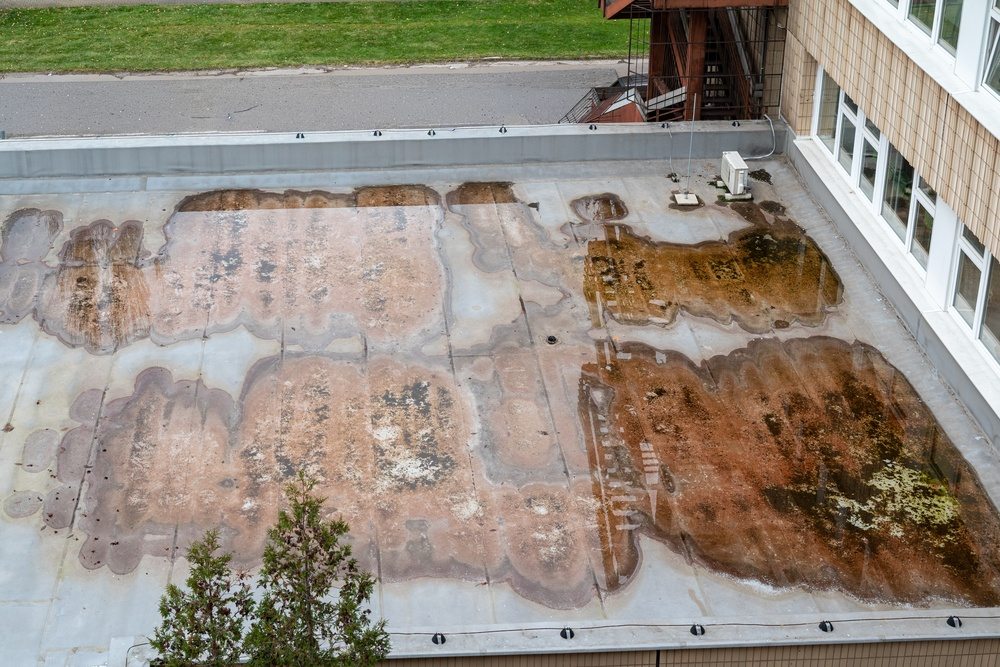
Flat roofs may look simple, but they rely on precise drainage to function correctly. Unlike sloped roofs that naturally shed water, flat roofs are designed with subtle angles that direct water toward drains, scuppers, or gutters. When this system works as intended, water moves off the roof efficiently after rain. When it doesn’t, water begins to collect in low areas, creating what’s known as ponding. Even small amounts of standing water place constant pressure on roofing materials and seams. Over time, this stress weakens the surface, allowing moisture to seep in. If you experience repeat leaks on a flat roof, drainage issues are often the real cause rather than isolated material failure. Understanding how critical proper drainage is helps you see why leaks keep returning until the root issue is addressed.
How Poor Drainage Leads to Ongoing Leaks
When water doesn’t drain properly, it lingers on your roof far longer than it should. This standing water slowly breaks down roofing membranes, coatings, and sealants. Seams and penetrations become especially vulnerable, as water naturally seeks the easiest path through the roof system. Over time, even high-quality materials can weaken under constant exposure. You may notice leaks after heavy rain, but the damage often persists even during dry periods because trapped moisture remains. As temperatures change, standing water expands and contracts, further stressing the roof surface. This cycle explains why patching a flat roof leak without fixing drainage often results in the same problem resurfacing months later. Until water is properly redirected off the roof, leaks are likely to repeat.
Common Drainage Issues Flat Roofs Face
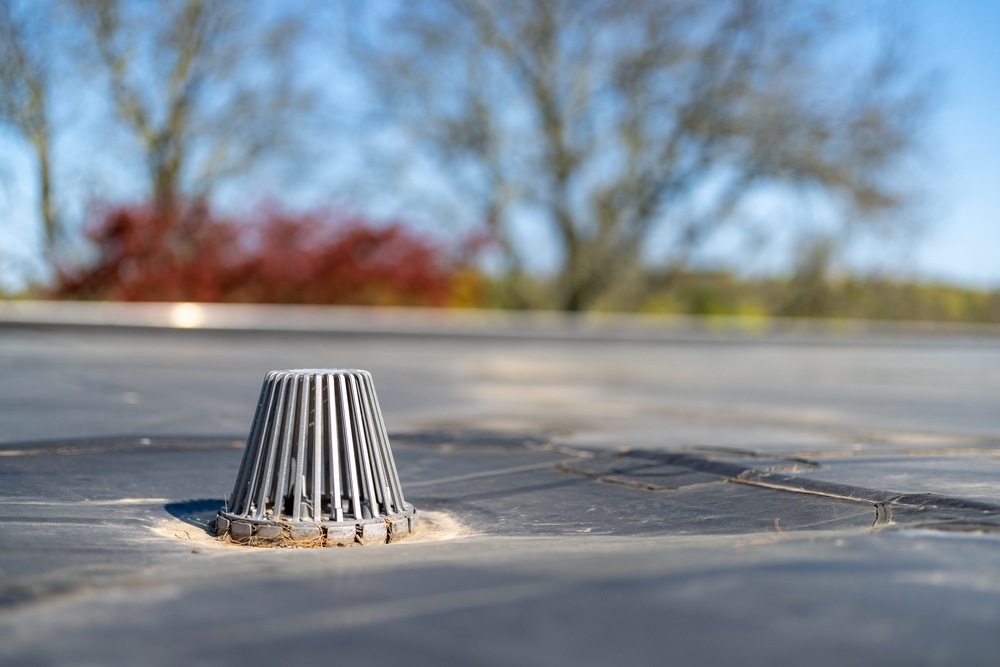
Several factors can interfere with flat roof drainage. Clogged drains are among the most common problems, often caused by leaves, dirt, or debris that collect around drain openings. Improper slope is another frequent issue, especially on older roofs or roofs that have settled over time. Even a slight dip can cause water to pool rather than flow toward drains. Damaged or deteriorated roof coatings can also contribute by allowing water to seep into the surface instead of shedding it efficiently. In some cases, drainage systems were never designed correctly for the roof size or layout. These issues may not be obvious from the ground, which is why drainage problems often go unnoticed until leaks become persistent and frustrating.
Preventing Leaks by Addressing Drainage Early
Preventing repeat leaks starts with identifying and correcting drainage issues before they cause widespread damage. Regular inspections help you catch clogged drains, low spots, and surface wear early. Keeping drains clear ensures water has a clear path off the roof after rain. Improving the slope in problem areas can eliminate ponding altogether, reducing long-term stress on the roof system. Protective roof coatings also play a key role by creating a seamless surface that helps water flow smoothly toward drainage points. When drainage is addressed proactively, repairs last longer and the roof performs more reliably. Instead of reacting to leaks as they appear, focusing on water movement gives you control over the problem and helps preserve the roof’s condition.
Creating Long-Term Protection for Your Flat Roof
Flat roof leaks don’t have to be a recurring headache. When drainage is corrected and reinforced, your roof becomes much more resistant to water intrusion. Taking action early helps you avoid repeated interior repairs, damaged insulation, and unexpected downtime. Reach out to Built 2 Last today for a free quote and start the process of applying a roof coating that will provide lasting protection for your home, saving you money and hassle in the long run. By improving drainage and strengthening your flat roof system, you set your property up for fewer leaks, better performance, and peace of mind for years to come.